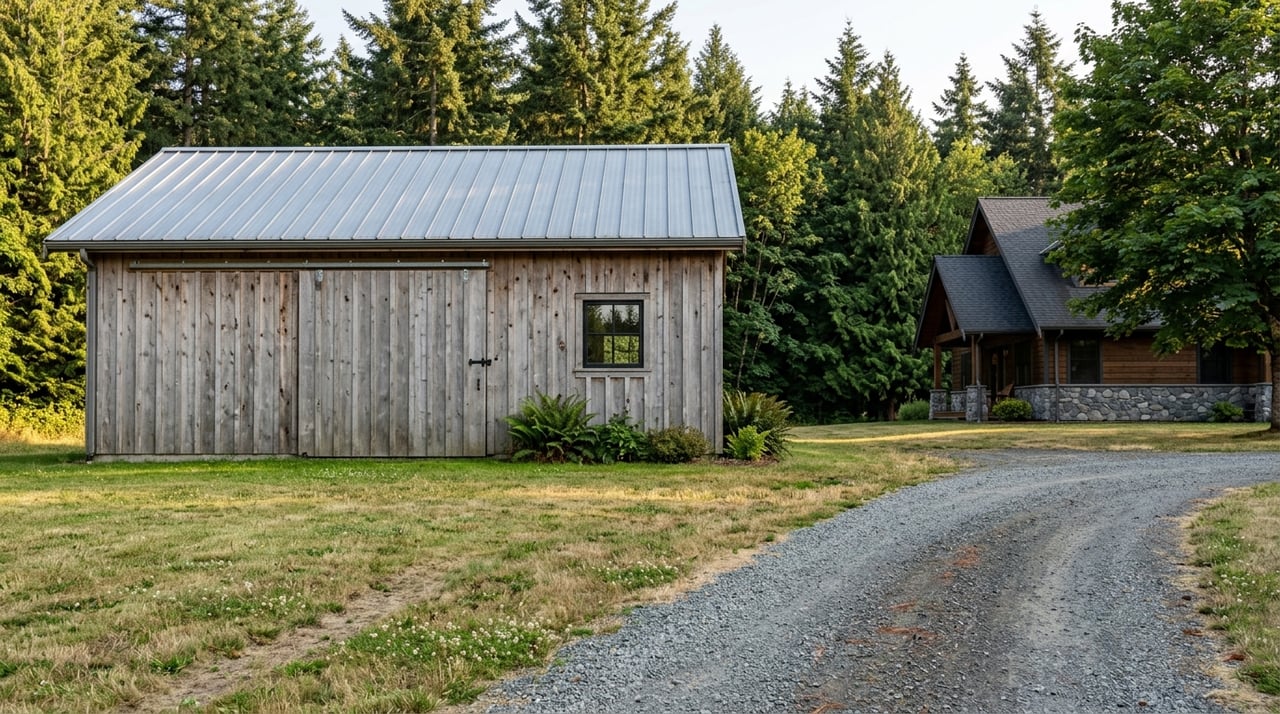
Looking for space to spread out in Sequim? An acreage or mini-farm property can offer room for gardens, animals, outbuildings, and a quieter rural lifestyle, but it also comes with more moving parts than a typical in-town home search. If you are thinking about buying in the Sequim area, this guide will help you understand what “mini-farm” can really mean locally, what to verify before you fall in love with a property, and how to shop with more confidence. Let’s dive in.
Why Sequim Appeals to Acreage Buyers
Sequim has a well-earned reputation for a drier climate than many other parts of Western Washington. NOAA data for Sequim 2 E shows 1991 to 2020 normals of 16.85 inches of annual precipitation and 1.4 inches of annual snowfall, with July and August averaging just 0.51 and 0.56 inches of rain.
That dry-summer pattern can be a real draw if you picture a large garden, lavender rows, berry plants, or open pasture. At the same time, the local climate makes water planning especially important, because lower rainfall does not remove the need for irrigation, pasture management, or dependable summer water supply.
Sequim also offers a wide range of rural settings. In the Sequim-Dungeness Planning Region, Clallam County includes rural residential, rural center, and rural commercial designations, along with areas such as R1, R2, and LAMIRDs like Sunland, Blyn, and Dungeness Village.
For you as a buyer, that means acreage can look very different from one listing to the next. One property may feel close to town with a more rural-suburban setup, while another may offer a more open parcel with stronger farm potential.
What “Mini-Farm” Means in Sequim
One of the biggest mistakes buyers make is assuming “mini-farm” is an official property type. In Clallam County, it is better to think of mini-farm as a useful shorthand, not a zoning category.
County materials show that small-scale agricultural use in the area can take many forms. Examples in county reports include a 1.6-acre lavender operation, a 2.6-acre organic vegetable farm, a 4.7-acre llama ranch, and woodlots in the 2- to 3.1-acre range.
The county also notes that lots 2.4 acres and larger can support horses or other farm animals, kitchen or hobby gardens, and other rural cottage industries. It also states that lavender or berry farms can work on parcels smaller than five acres.
That is encouraging if you want a manageable property rather than a full working farm. Still, what you can actually do on a parcel depends on the exact zoning and the county’s allowed-use rules.
Lot Size and Zoning Matter More Than the Label
In Sequim, acreage homes exist on a spectrum. County planning materials describe rural homesite patterns at one-acre, 2.4-acre, and five-acre densities in some areas, and rural designations can extend from 2.4-acre parcels to 20-acre-or-larger parcels, with cluster options in some zones.
That means the number of acres alone will not tell you whether a property fits your plans. A listing may be marketed as farm, horse property, or acreage, but Clallam County says what is allowed depends on the parcel’s zoning, and the county has more than 50 zones.
The good news is that the county comprehensive plan says agriculture is an allowed land use in all zoning categories, and much of the county’s agriculture happens outside Agricultural Resource zoning. Even so, the details still matter, especially if you hope to add structures, animals, sales activity, or another dwelling.
For example, the county’s agricultural accessory uses ordinance says qualifying farms need at least one acre of land in agricultural production and must be in a Rural or Resource zoning district where agriculture is allowed. The ordinance specifically contemplates uses such as:
- Temporary on-site retail stands
- On-site retail stores
- Greenhouses or nurseries
- Farmers markets
- U-pick sales
- Tours of the agricultural operation
- Work stays
- Other farm-dependent activities
If your intended use is not clearly listed, Clallam County notes that a similar-use authorization may be possible through a Conditional Use Permit reviewed by the Hearing Examiner. Planning staff also notes that variances may not be allowed for land uses, which makes early due diligence very important.
Accessory Housing Can Change the Equation
Many acreage buyers think beyond the main house. You may be considering a guest space, multigenerational setup, or detached ADU.
In Clallam County, accessory housing is allowed where it is consistent with county code. Detached ADUs outside designated urban growth areas generally must be on parcels of at least 1.5 acres, unless the project is served by community water and adequate sewage disposal.
That may sound straightforward, but accessory housing can affect more than layout. Water-system classification, septic capacity, and parcel zoning can all shape what is realistic.
Water and Septic Should Be Early Priorities
On acreage, utility due diligence is just as important as the house itself. In Clallam County, proof of potable water is required for most building permits, and septic permits are required for new, repaired, or expanded systems.
If you are buying with plans for gardens, animals, an ADU, or small-scale farm activity, water and wastewater capacity can limit what you can do. In many cases, those factors matter more than square footage or interior finishes.
For wells, Clallam County says wells must be drilled by a licensed well driller. New construction also requires Well Site Verification and Water Availability approval before drilling.
The county notes that projects in the Dungeness Water Rule area may need mitigation for new water uses supplied by wells. That is a major reason to verify water details before assuming a parcel will support your long-term plans.
County well-protection guidance also recommends a 100-foot clear radius where possible and minimum setbacks such as:
- 50 to 100 feet from property lines
- 50 feet from septic tanks and pump chambers
- 100 feet from drainfields and reserve areas
- 5 feet from foundations and eaves
The county also recommends testing individual wells for bacteria yearly and nitrate every three years. If a property already has a well, asking for testing history is a smart step.
Water System Type Matters Too
This point can easily get missed when buyers imagine future flexibility. In Clallam County, an individual water system is defined as a private well serving one single-family residence, two residences on the same parcel, or two residences on separate parcels with a shared-well agreement.
If a system serves more than two residences or serves businesses, food service establishments, or bed and breakfasts, it is treated as a public water system. So if you are dreaming about a second dwelling or some form of on-site business activity, the water-system category may become a bigger issue than expected.
Outbuildings Are a Big Part of Acreage Value
For many buyers, the appeal of a Sequim acreage property is not just the land. It is the chance to have a barn, greenhouse, workshop, storage building, or equipment shed.
Clallam County’s building permit rules say a permit is required to erect, construct, enlarge, alter, move, improve, convert, or demolish a building or structure. There is a limited residential exemption for single-story detached tool or storage sheds, playhouses, and similar uses under 400 square feet that are 6 feet away from existing buildings and classified as U occupancies.
That means you should not assume every existing barn, shed, or shop was exempt from permitting. If outbuildings are part of what makes a property attractive, it is worth confirming whether they were permitted or clearly fall within an exemption.
Setbacks and Site Limits Can Surprise Buyers
Acreage often looks wide open when you first visit. But usable space can shrink quickly once you account for setbacks, health rules, environmental review, and shoreline regulations.
Clallam County says setbacks can come from several layers at once, including building code, zoning, health codes, critical areas, and shoreline rules. For parcels abutting forestry resource zoning, the county notes a 50-foot residential setback and a 20-foot detached accessory-structure setback may apply along the resource-zone boundary.
Critical-area review also matters on rural land. County policy protects wetlands, fish and wildlife habitat, flood areas, geologically hazardous areas, and aquifer recharge areas.
If a project is within 200 feet of a critical area, additional conditions may apply, and wetlands have specific 200-foot review rules. If a property is near a shoreline, the Shoreline Master Program may add another permit layer, including a substantial development permit, conditional use permit, or variance permit depending on the project and shoreline designation.
A Smart Buyer’s Sequim Checklist
Before you buy an acreage or mini-farm property in Sequim, make sure you verify the basics that shape real-world use.
- Get the exact zoning and any overlay from the county map or parcel search.
- Ask whether your intended uses are allowed outright or only conditionally.
- Clarify plans for farm stands, u-pick, greenhouses, second dwellings, or ADUs before you assume they are possible.
- Pull the well log and review available water testing history.
- Confirm whether Dungeness Water Rule mitigation applies.
- Review septic permit history and whether the system supports your intended bedroom count or accessory housing plan.
- Verify barns, sheds, and other outbuildings were permitted or clearly exempt.
- Check for critical areas, shoreline designations, and resource-zone setbacks before planning a shop, guest cottage, or farm structure.
How to Shop More Confidently
The right Sequim acreage property is rarely just about finding the prettiest house on the biggest lot. It is about matching your lifestyle goals with a parcel that supports them under local rules.
If you want a garden-focused property, you may care most about water supply, sun exposure, and manageable land size. If you want animals or more intensive use, zoning, acreage, septic, and building placement may carry more weight.
That is why a process-driven home search matters. When you evaluate acreage with a clear checklist and local perspective, you can avoid expensive surprises and focus on properties that truly fit how you want to live.
Whether you are looking for room to garden, keep animals, or simply enjoy more privacy and flexibility, a well-vetted rural property can be a great fit in the Sequim area. If you want guidance on buying a home with land in Western Washington, connect with Scott Ahern for a consultative, well-informed approach.
FAQs
What counts as a mini-farm property in Sequim?
- In Sequim, mini-farm is not a formal zoning category. It is a general term for smaller rural properties that may support uses like gardens, animals, lavender, berries, or other small-scale agricultural activity depending on parcel zoning and county rules.
How many acres do you need for a mini-farm in Clallam County?
- It depends on the intended use and the parcel’s zoning. County materials note that parcels 2.4 acres and larger can support horses or other farm animals, while some smaller parcels can support uses such as lavender or berry farming.
Can you add an ADU on Sequim acreage?
- In some cases, yes. County code says detached ADUs outside designated urban growth areas generally must be on parcels of at least 1.5 acres unless the property is served by community water and adequate sewage disposal.
Why is water review important for Sequim acreage homes?
- Water review matters because proof of potable water is required for most building permits, and well location, water availability, and possible Dungeness Water Rule mitigation can all affect what you can do with the property.
What should you check about septic on a Sequim rural property?
- You should confirm septic permit history and whether the system can support your intended bedroom count, expansion plans, or accessory housing goals.
Do barns and sheds need permits on Sequim acreage?
- Often, yes. Clallam County generally requires permits for buildings and structures, with a limited exemption for certain single-story detached storage-type buildings under 400 square feet that meet spacing and use requirements.
What site restrictions can affect building plans on acreage in Sequim?
- Setbacks, critical areas, shoreline rules, health regulations, and resource-zone boundaries can all limit where you place a home, shop, barn, guest cottage, or other structure on the property.